Commercial Solar in Michigan
Michigan commercial electricity rates from DTE Energy and Consumers Energy are among the highest in the Midwest, driven in part by Michigan's transition away from coal generation and significant utility grid investment costs. For manufacturing, distribution, and agricultural operations in the Detroit metro, Grand Rapids, Lansing, and across rural Michigan, commercial solar reduces a meaningful operating cost without capital outlay under our ESP model. Michigan's 100% clean energy commitment, codified in the Clean Energy and Jobs Act of 2023, creates a favorable long-term regulatory environment for distributed commercial solar. Review Michigan EGLE's renewable energy programs for current incentive guidance.
Michigan Solar Incentives 2026
- Federal ITC (30-50%): Base 30% ITC plus energy community adder in several Michigan counties with historical auto/fossil fuel industry transition
- Michigan Personal Property Tax Exemption: Renewable energy equipment exempt from personal property tax assessment
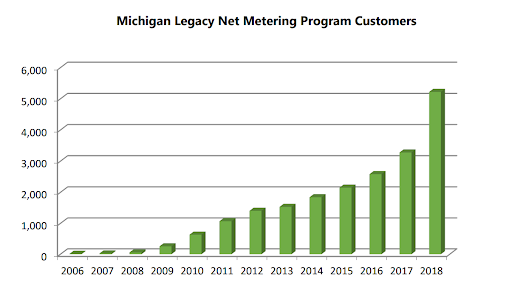
- DTE Energy / Consumers Energy Net Metering: Michigan utilities offer commercial net metering programs for qualifying distributed solar systems
- USDA REAP Grants (Rural Michigan): Rural Michigan businesses and agricultural producers qualify for REAP grants covering up to 25% of solar project cost
- MACRS 5-Year Depreciation: Federal accelerated depreciation on ITC-adjusted basis
Michigan Commercial Solar Market
The Detroit metro and Southeast Michigan industrial corridor along I-75, I-94, and I-96 represent the densest commercial solar market in the state, with automotive-adjacent manufacturers and tier-1 suppliers among the strongest candidates. Grand Rapids and the West Michigan manufacturing corridor have seen growing solar adoption in food processing, furniture manufacturing, and industrial distribution. Rural Michigan — particularly the agricultural markets in the Thumb region and northern Lower Peninsula — benefits from USDA REAP grant eligibility that can add 25% of project cost in non-repayable grant funding on top of the federal ITC. The USDA REAP program is administered through Michigan's Rural Development office.
Detroit Area Auto Dealer Group Saves $72k Annually Across Two Locations
The Situation
An auto dealer group with two suburban Wayne County locations was paying DTE Energy over $100,000 combined annually. Federal tax liability and dual-site roof space made multi-location ESP model straightforward.
Our Approach
Michigan EPC partner designed 390 kW across both facilities under ESP model. DTE interconnection completed for both sites within 90 days. Wayne County energy community eligibility increased effective ITC to 40%.
The Outcome
Combined annual savings of $72,000 from day one. Energy community bonus added $39,000 above base ITC. 25-year projected savings: $2.1 million across portfolio.
Client name changed. Results vary. Prior results do not guarantee similar outcomes.
Frequently Asked Questions
Related Resources
- → Commercial Solar Financing: ESP, PPA, C-PACE Compared
- → 2026 Commercial Solar Tax Incentives Guide
- → MACRS Depreciation for Commercial Solar
- → How the ESP Zero Cap-Ex Program Works
- → Solar + Battery Storage
Nearby States
Ohio, Indiana, Illinois, Wisconsin, and Minnesota. View our full US service area.